Who is DSPTCH built for?
DSPTCH is built for renewable energy contractors (solar EPCs, wind contractors, and their subs) on IRA projects subject to prevailing wage and apprenticeship requirements. It’s also built for asset owners and developers who need full visibility into their contractor supply chain without managing compliance themselves.
Does DSPTCH replace our payroll system?
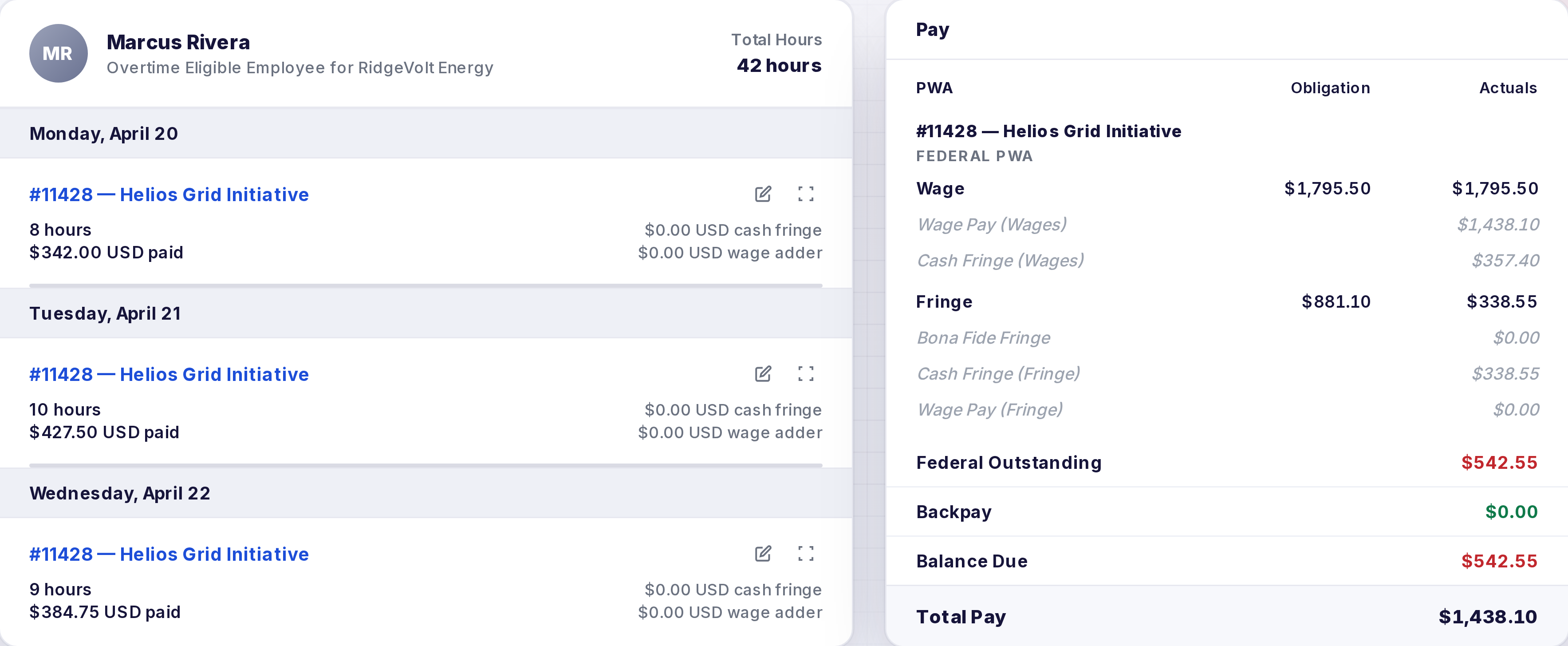
No. DSPTCH sits alongside your existing payroll system (ADP, Paychex, QuickBooks, Gusto, and 200+ others). We validate payroll data against prevailing wage and apprenticeship requirements, surface violations before payroll closes, and produce certified payroll outputs. Your payroll system keeps running. DSPTCH keeps it compliant.
What’s the difference between DSPTCH and an auditor?
Auditors find violations after the fact, sometimes 6 to 12 weeks after payroll has run. DSPTCH monitors compliance throughout the pay period so your team catches and resolves issues before payroll closes. Auditors record violations. DSPTCH prevents them.
How long does it take to get set up?
Most contractors are operational within one pay cycle. Onboarding connects your payroll source, configures wage determinations and classifications, and trains your field supervisors. No lengthy implementation project.
Can DSPTCH handle multiple contractors and subcontractors?
Yes. DSPTCH is built for multi-party projects (GCs, subs, and staffing vendors). Asset owners get a unified view of every sub-contractor’s compliance status. GCs see sub-tier compliance without chasing anyone.
Which compliance programs does DSPTCH support?
DSPTCH supports federal IRA/PWA, NYSERDA NY-SUN Prevailing Wage Adder, IL SHINES, CA SURGE, Oregon BOLI, and the New Mexico Energy Transition Act. Working under a program not listed? Contact us, we likely support it.
What does the $120/user/month pricing actually cover?
The $120/user/month covers field workers actively logging time and pay data for PWA compliance validation. All administrative licenses (PMs, payroll admins, compliance reviewers, executive viewers) are included at no charge. Volume discounts are available based on headcount, project count, and term length.
What is PWA compliance?
PWA compliance means meeting the prevailing wage and apprenticeship requirements introduced by the Inflation Reduction Act for clean energy tax credits. Contractors must pay federal prevailing wages to all laborers and mechanics, hit apprenticeship hour and ratio thresholds, and keep audit-ready records. Failure triggers backpay, $5,000-per-worker Cure Provision penalties, and risks tax credit eligibility.
What is prevailing wage compliance?
Prevailing wage compliance means paying every worker no less than the local wage and fringe rates for their classification on a covered project. Rates come from the U.S. Department of Labor for federal projects or state agencies like California DIR, Oregon BOLI, and NYS DOL. DSPTCH is prevailing wage compliance software that automates classification, calculation, and reporting in real time.
What is a wage determination?
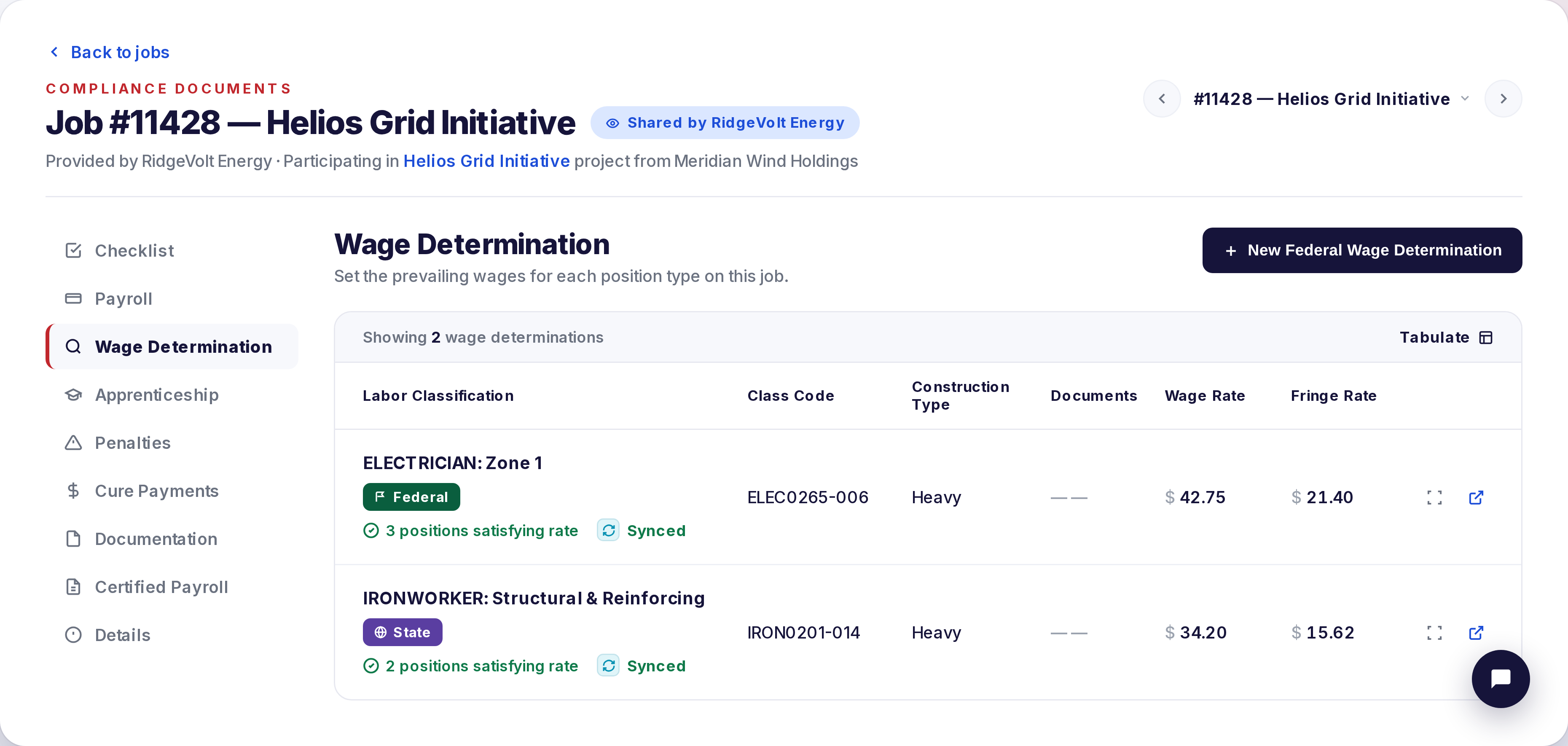
A wage determination is an official document listing the minimum base wage and fringe rates for each labor classification on a covered project. Federal wage determinations come from the U.S. Department of Labor and apply to IRA-funded clean energy work. State wage determinations come from agencies like California DIR, Oregon BOLI, and NYS DOL. Rates change periodically, so contractors must monitor and adjust to stay compliant.
What is certified payroll?
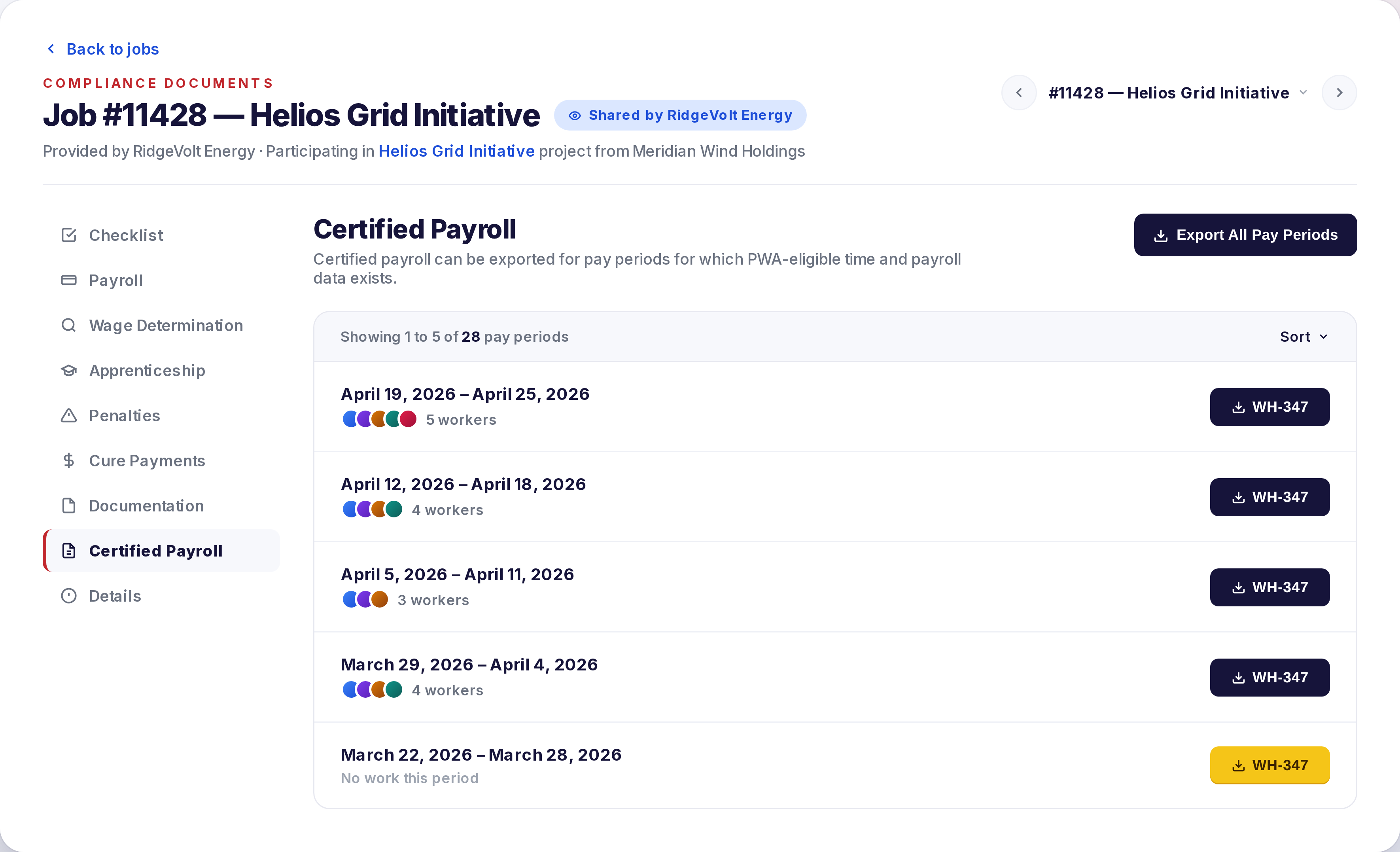
Certified payroll is the weekly report contractors on prevailing-wage projects must submit to prove they paid workers correctly. The federal version, Form WH-347, lists each worker’s classification, daily hours, gross wages, deductions, fringe benefits, and a signed Statement of Compliance. It’s required for federal and state prevailing wage projects, including IRA-funded clean energy work. Late or inaccurate certified payroll triggers backpay liability, penalties, and risks tax credit eligibility.
What is a WH-347 form?
The WH-347 is the U.S. Department of Labor’s standard certified payroll report. Federal contractors and subs use it weekly to document each worker’s name, classification, hours, gross wages, fringe, deductions, and a signed Statement of Compliance. It’s required under federal prevailing wage rules and is the standard for IRA prevailing wage projects. DSPTCH auto-generates WH-347 forms from your payroll data in one click.
Do I need certified payroll software?
If your projects are subject to federal prevailing wage requirements (IRA-funded clean energy, federal infrastructure, NY-SUN, IL SHINES, Oregon BOLI), certified payroll software cuts the manual work and error risk in producing weekly WH-347s. Without it, payroll teams rebuild WH-347s by hand each week. DSPTCH is prevailing wage compliance software that integrates with 200+ payroll systems and generates certified payroll automatically.
What is IRA compliance for clean energy projects?
To qualify for full clean energy tax credits under the Inflation Reduction Act, projects must meet two requirements: all laborers and mechanics paid applicable federal prevailing wage rates, and qualified apprentices performing a minimum percentage of total labor hours (12.5% or 15% depending on construction start year) at the right journeyman-to-apprentice ratios. Missing either reduces the credit by 80% unless cured. Recordkeeping, certified payroll, and apprentice ratio tracking are the core IRA compliance obligations.
How is the IRA Cure Provision penalty calculated?
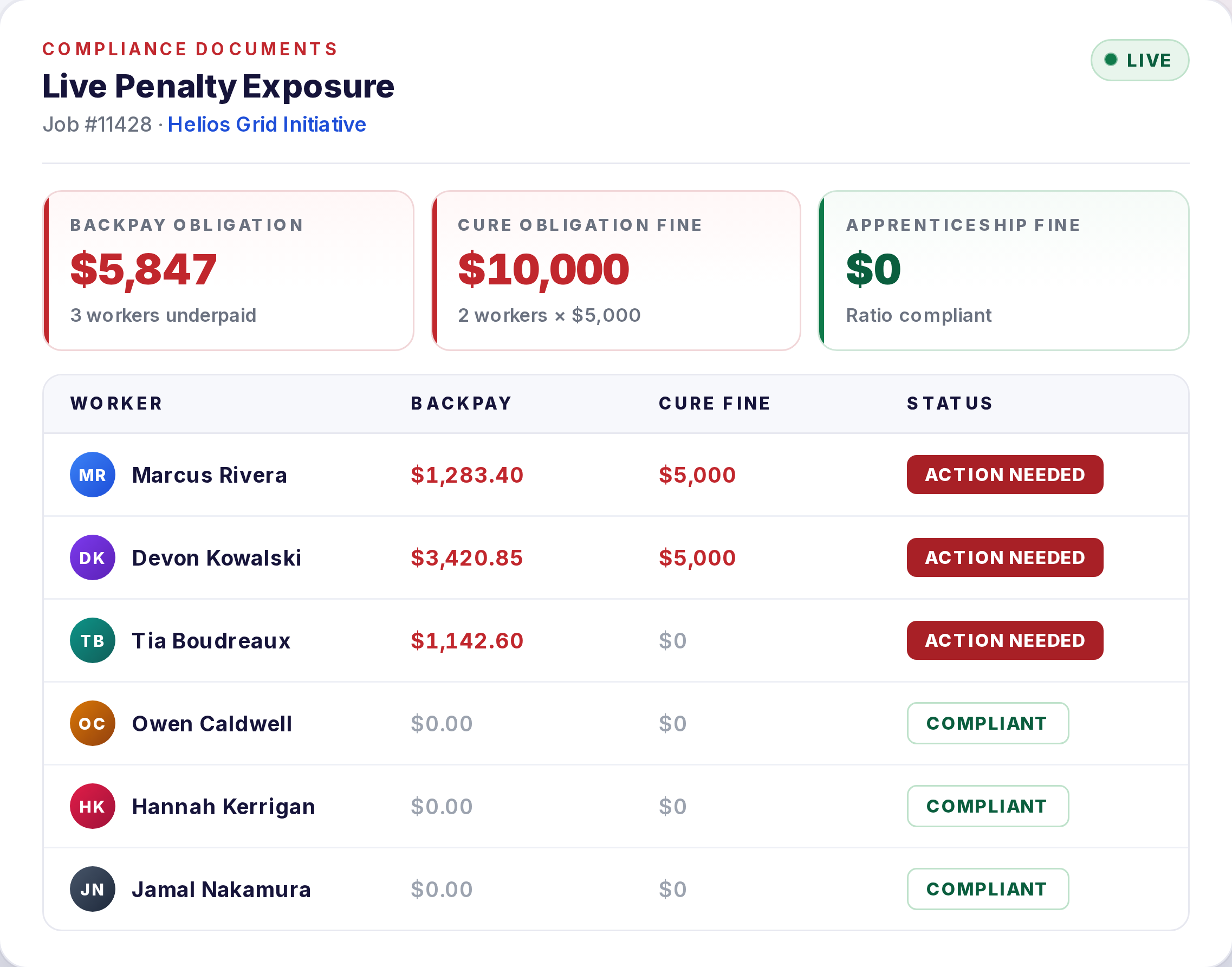
For each worker paid below the required prevailing wage, the contractor owes backpay plus interest, plus a $5,000-per-worker penalty. “Intentional disregard” violations rise to $10,000 per worker with a 3x multiplier on backpay. The cure window is time-limited. DSPTCH calculates exposure across backpay, Cure Provision fines, and apprenticeship penalties in real time, so contractors can act inside the cure window.
How does the NYSERDA NY-SUN Prevailing Wage Adder work?
The NY-SUN Prevailing Wage Adder is an incentive from NYSERDA for solar projects that meet NYS DOL prevailing wage requirements. Eligible projects earn $0.125 to $0.20 per watt on top of the base NY-SUN incentive. Compliance requires quarterly CPA-certified payroll, electronic filings with NYS DOL, and Article 8 wage determinations. DSPTCH automates the submissions and tracks rate updates from NYS DOL.
What’s the difference between IRA, NYSERDA, IL SHINES, CA SURGE, and Oregon BOLI compliance?
Each program has its own wage determination source, reporting cadence, and penalty structure. IRA/PWA is federal and ties to clean energy tax credits. NYSERDA NY-SUN is New York and offers a per-watt adder for solar. IL SHINES governs Illinois Adjustable Block solar projects. CA SURGE applies California DIR rules. Oregon BOLI enforces state prevailing wage on Oregon renewable projects. DSPTCH handles all five from one platform.